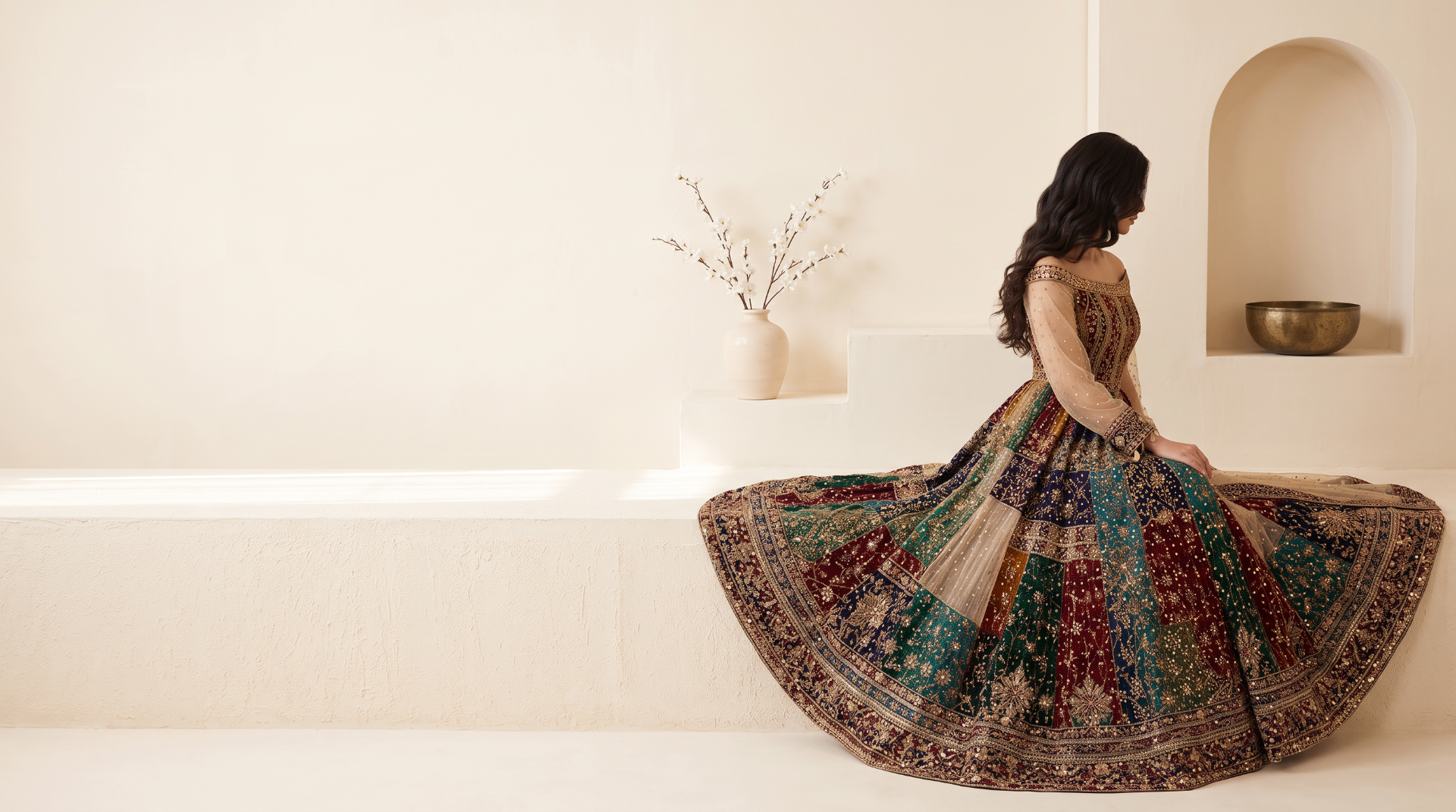
Overture
آنچه که مادران ما پوشیدند
What our mothers wore, we are still learning to make.
For a thousand years the women of the eastern Persianate world dressed themselves in cloth that carried a country. Silks and velvets travelled from Isfahan and Herat through the Khyber Pass; silver coins from Kabul were sewn into hems in the bazaars of Peshawar; a turquoise from the Nishapur mines closed a bride's collar at Kandahar.
Gulālai is the quiet continuation of that habit. Seven pieces, each with a name older than the country it comes from. Nothing about it hurries; nothing about it apologises.
The Map of the Cloth
Four cities. One long thread.
Each dress belongs, in the older way, to a city. The palette, the embroidery, the way the sleeve falls — all of it comes from somewhere.
01
هرات
Herat
The city of Gauhar Shad Begum — of turquoise-tiled mosques, of women who read Persian at court and paid for the poets who wrote it.
02
کابل
Kabul
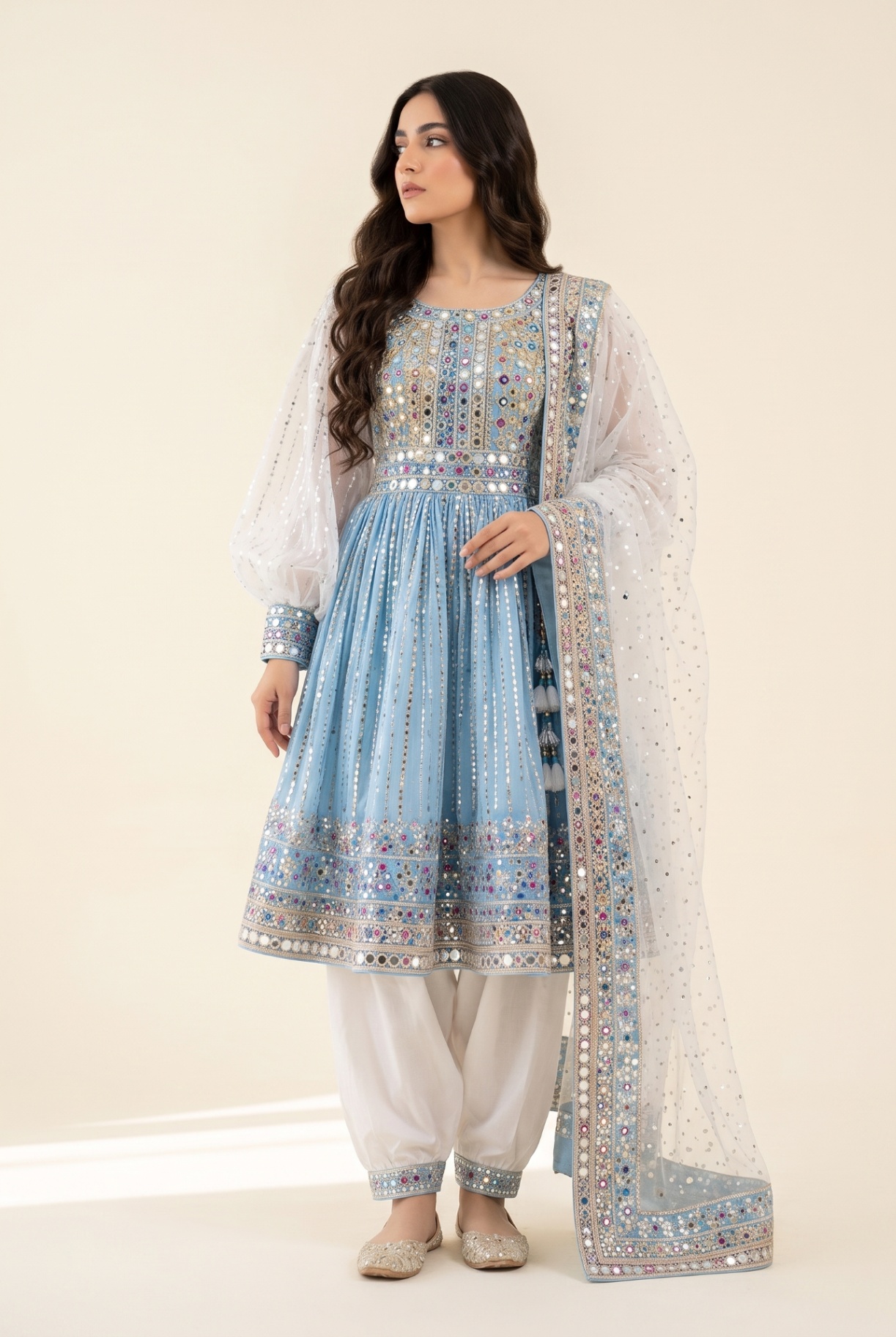
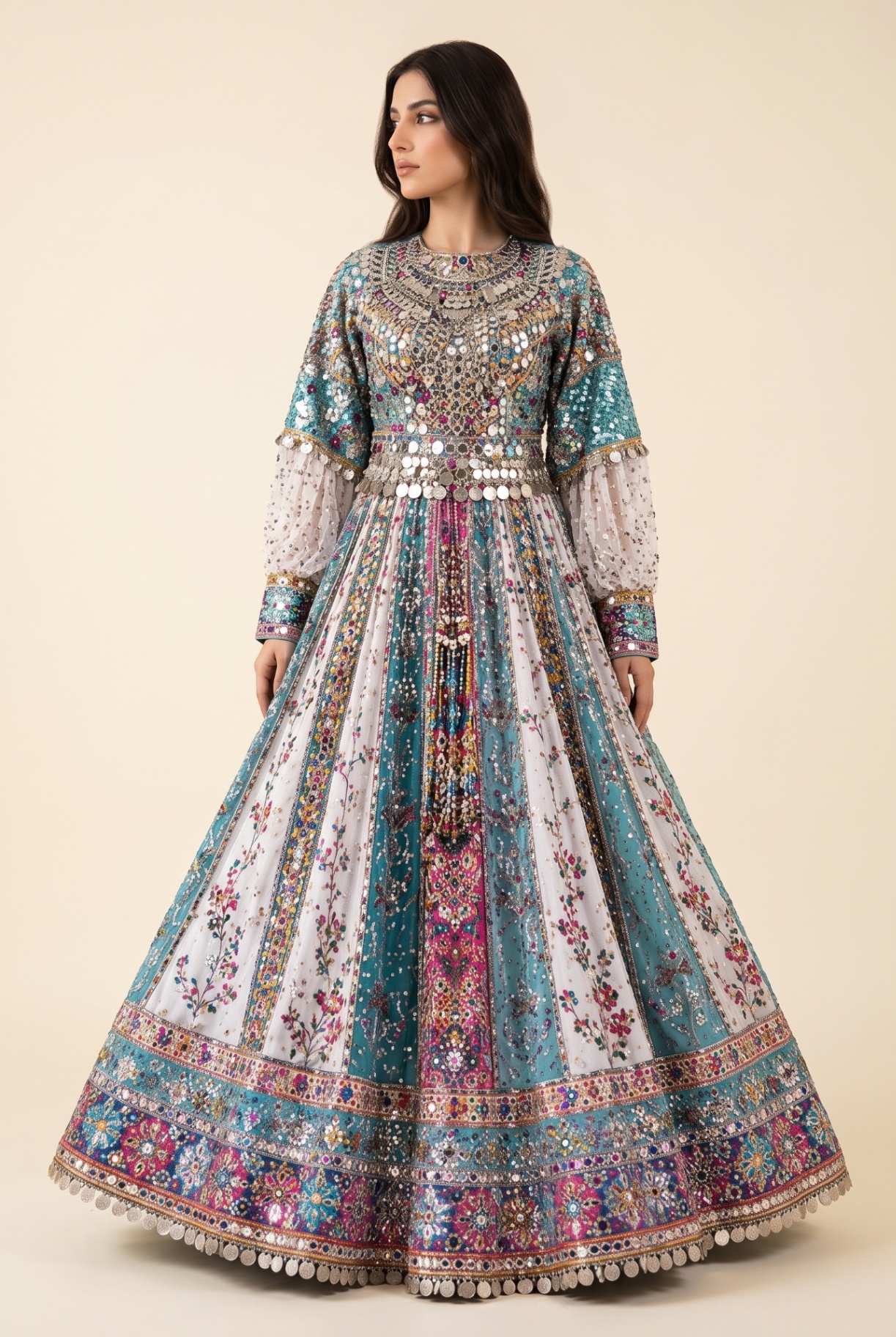
Silver, coin and mirror. The bazaars where a caravan girl's collar was fixed with rupees before she left for the road.
03
پېښور
Peshawar
Cross-border weave and Pashto verse. The old workshops where kuchi cloth is still cut the way it was in a grandmother's mother's time.
04
قندهار
Kandahar
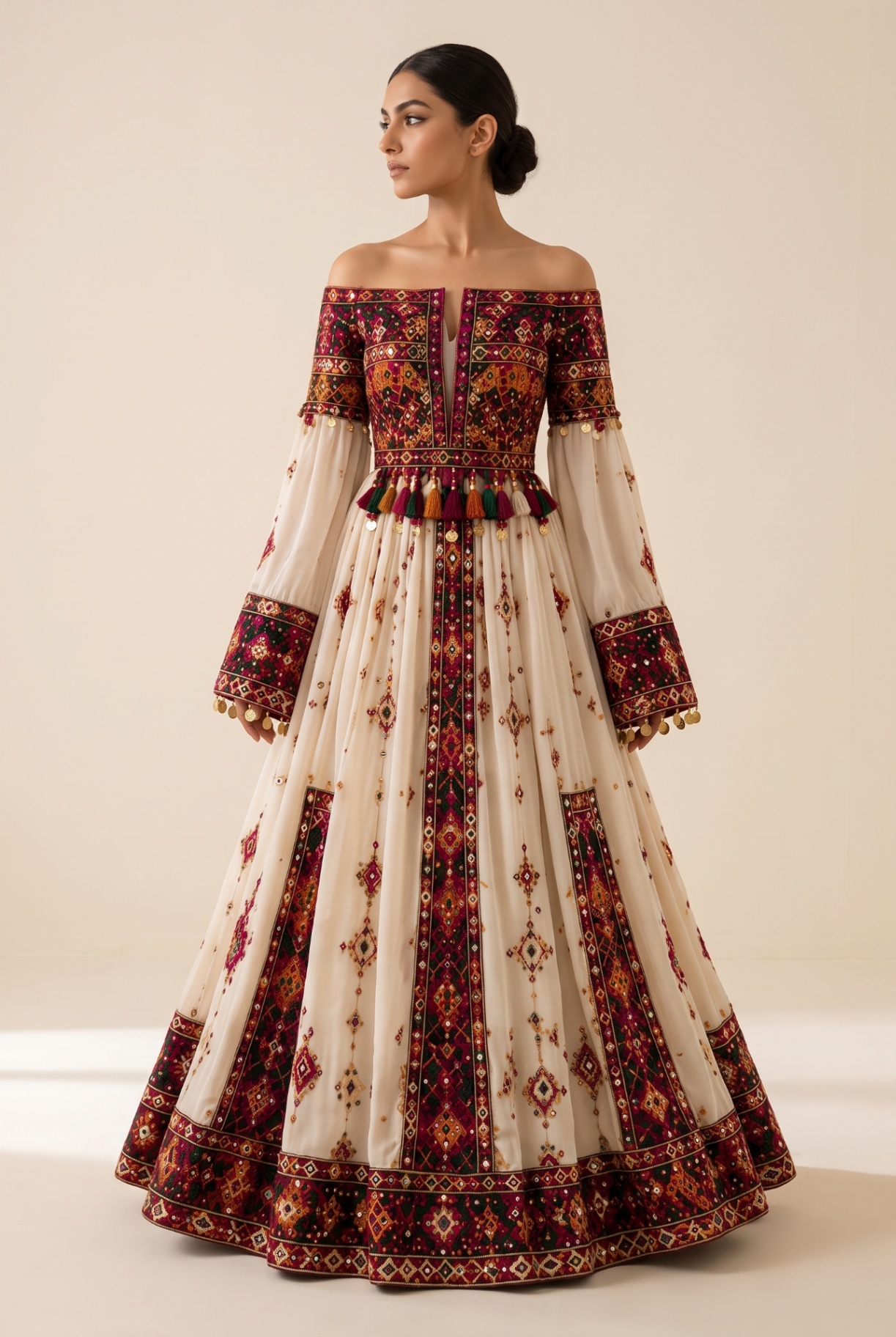
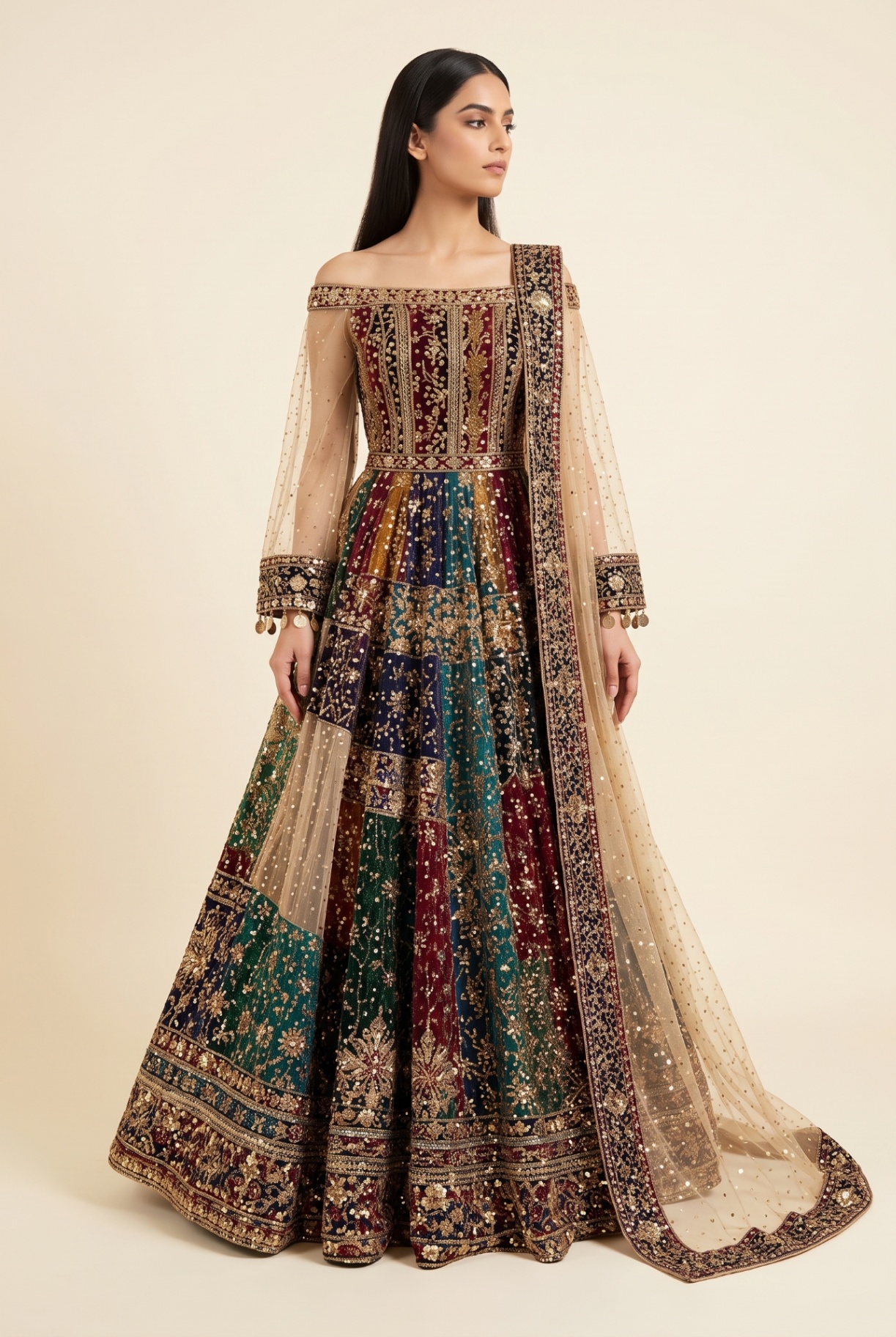
Pomegranate red and Nishapur turquoise. The patchwork palette, the geometry of the beaded chest panel, the sound of coins at the hem.
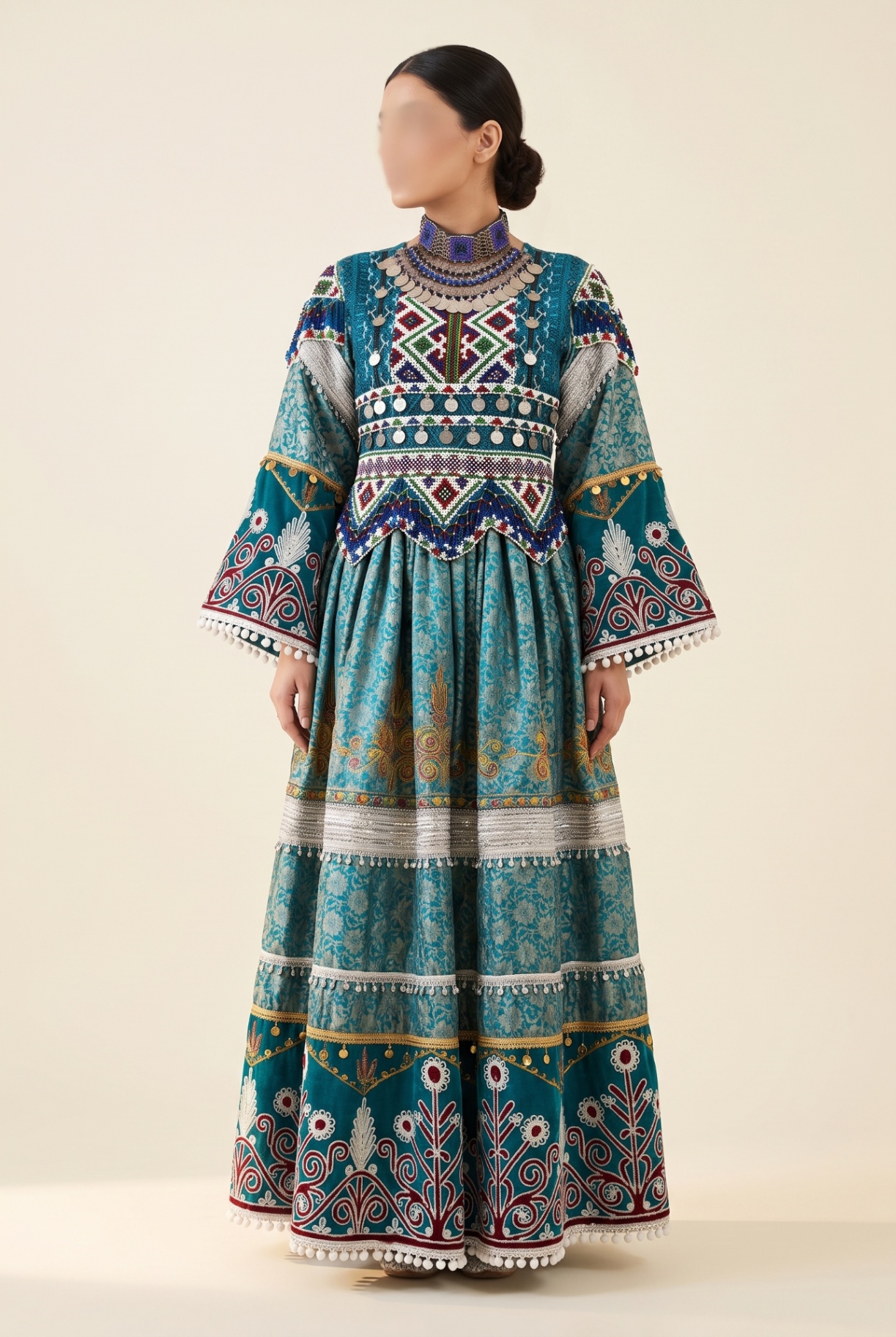
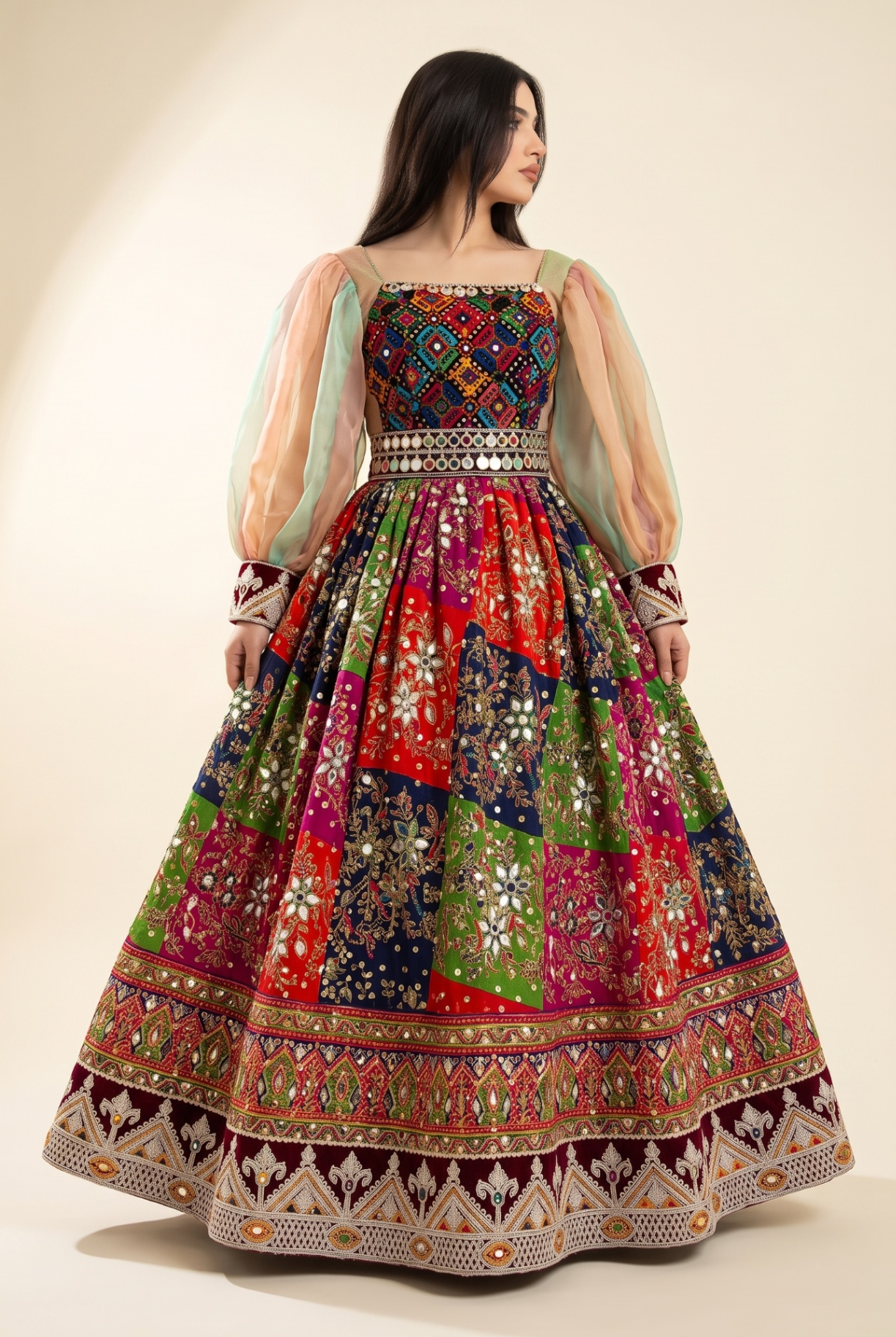
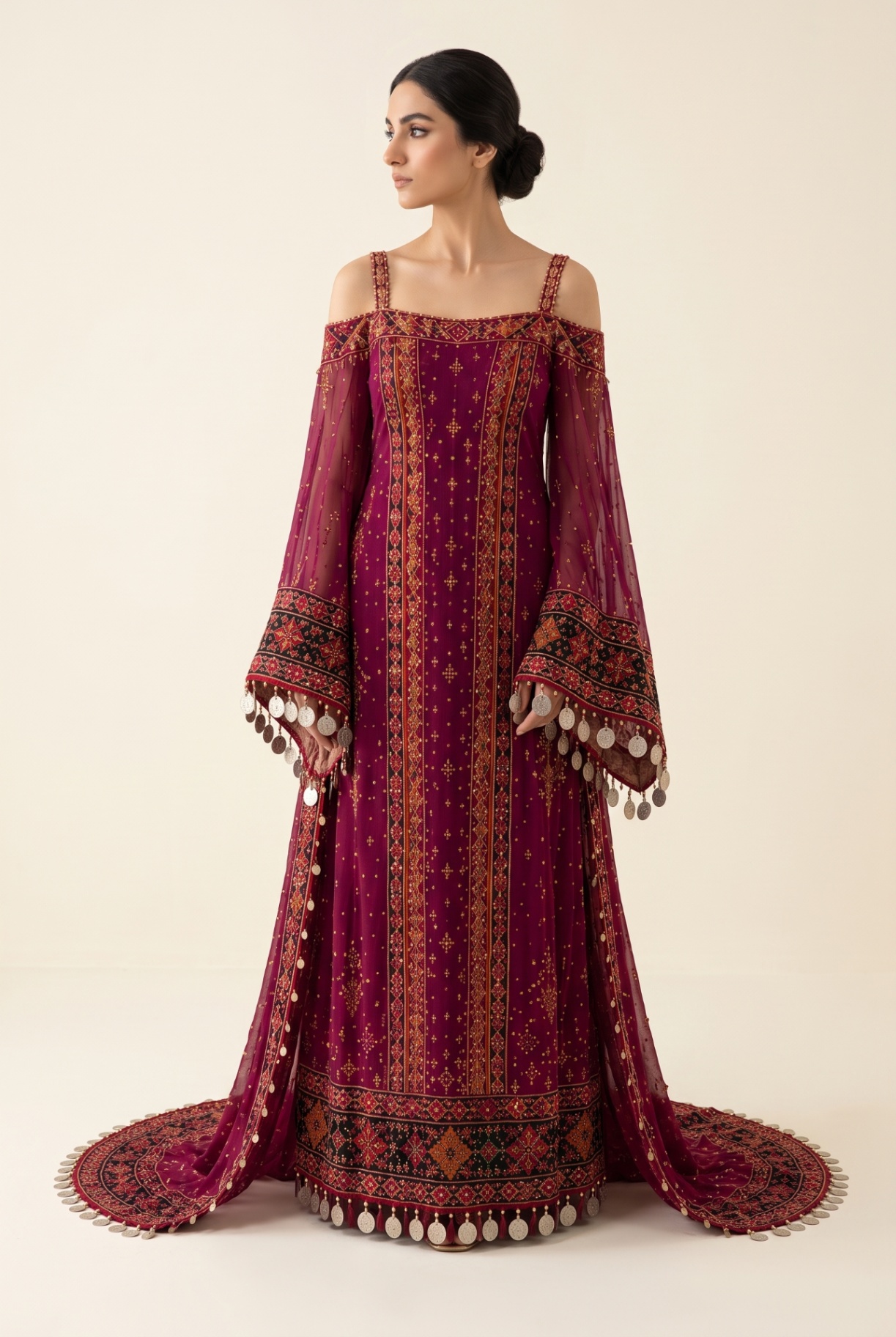
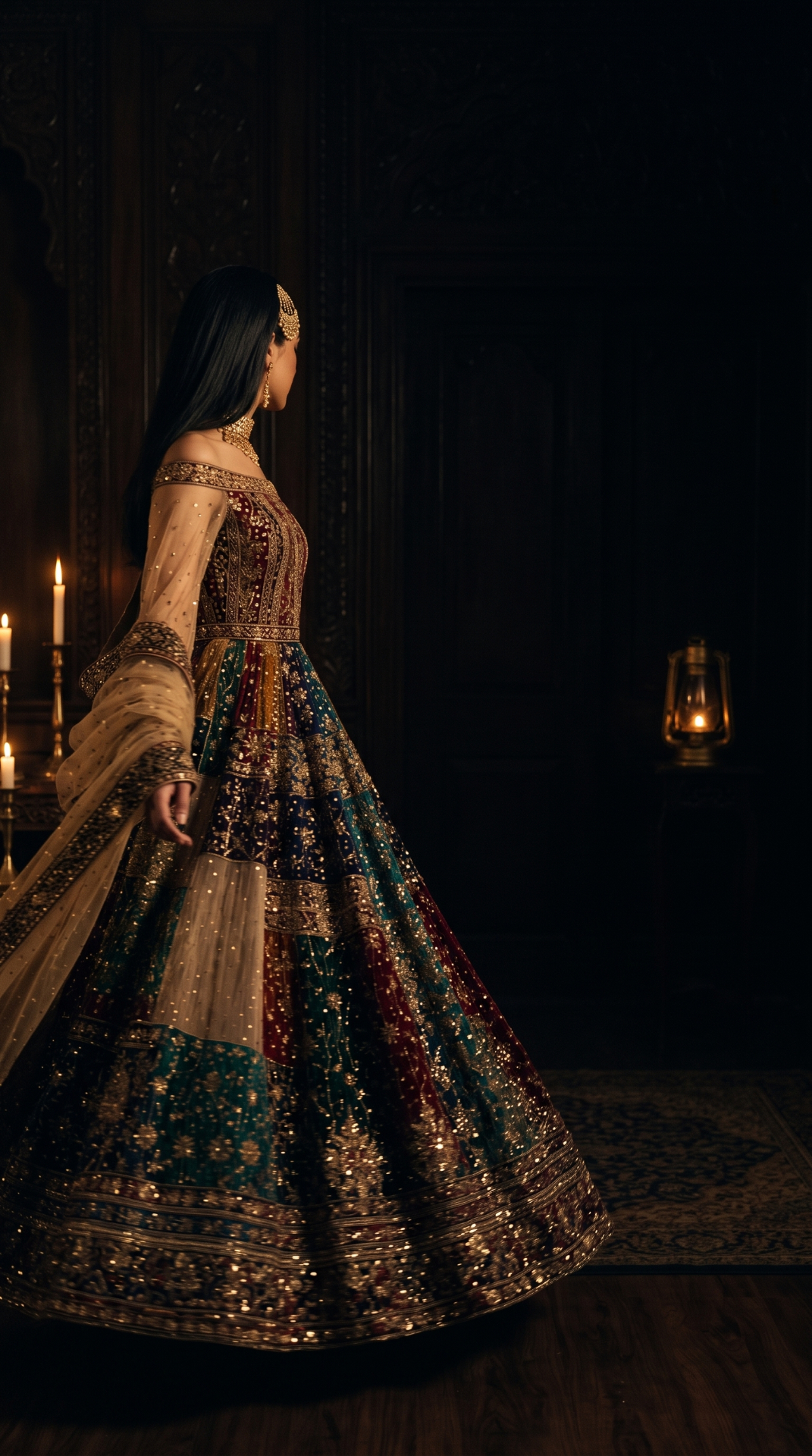
The Tradition of the One Size
یک اندازه · د یو ډول
Every Afghan dress is one size — because a proper dress finds its own fit.
The women of Herat, Kabul and Peshawar have cut their cloth the same way for centuries: generous through the sleeve, gathered at the waist by a worked sash, held at the shoulder by the fall of the embroidery. There is no zip and no dart. The garment answers to the body, not the other way round.
A Gulālai piece is made this way. The sash is the fit. The coin belt is the fit. The shoulder line is the fit. When you order, we build the piece around your measurements — but the silhouette, the language, remains the older one.
The Seven
Read them like chapters.
Chapter I
شهدخت
SHAHDOKHT
The Princess
Herat · Kabul
Chapter II
ستاره
SITARA
The Star
Kabul · Mazar-i-Sharif
Chapter III
گلرنگ
GULRANG
Blossom of Colour
Peshawar · Kabul
Chapter IV
فیروزه
FIROZA
The Turquoise
Nishapur · Kandahar
Chapter V
رنگینه
RANGINA
Full of Colour
Peshawar · Kandahar
Chapter VI
سلطانه
SULTANA
The Sovereign
Herat · Delhi
Chapter VII
دُرِّ شاه
DUR-E-SHAH
The King's Pearl
Kabul · Lahore
The Craft
Nobody here is doing this quickly.
I · The Hand
Embroidered by women
Every piece is worked by a small group of women in Peshawar and Kabul, using techniques their mothers taught them — sozni, zardozi, mirror-setting, glass beadwork. Nothing printed, nothing fused, nothing quick.
II · The Hours
Six to eight weeks, sometimes more
Nothing is kept in a warehouse. When you commission a piece, the cutting begins. The heaviest gowns take three hundred hours of embroidery — which is why we make very few of them, and why we never rush one.
III · The Materials
Coin, mirror, silk, silver
Antique-finish coins, hand-set mirror, real metallic thread, matte silk crepe over cotton-silk lining. Every seam is finished, every hem weighted, every piece built to be kept for a daughter.
The Arrival
A dress should arrive the way a letter does.
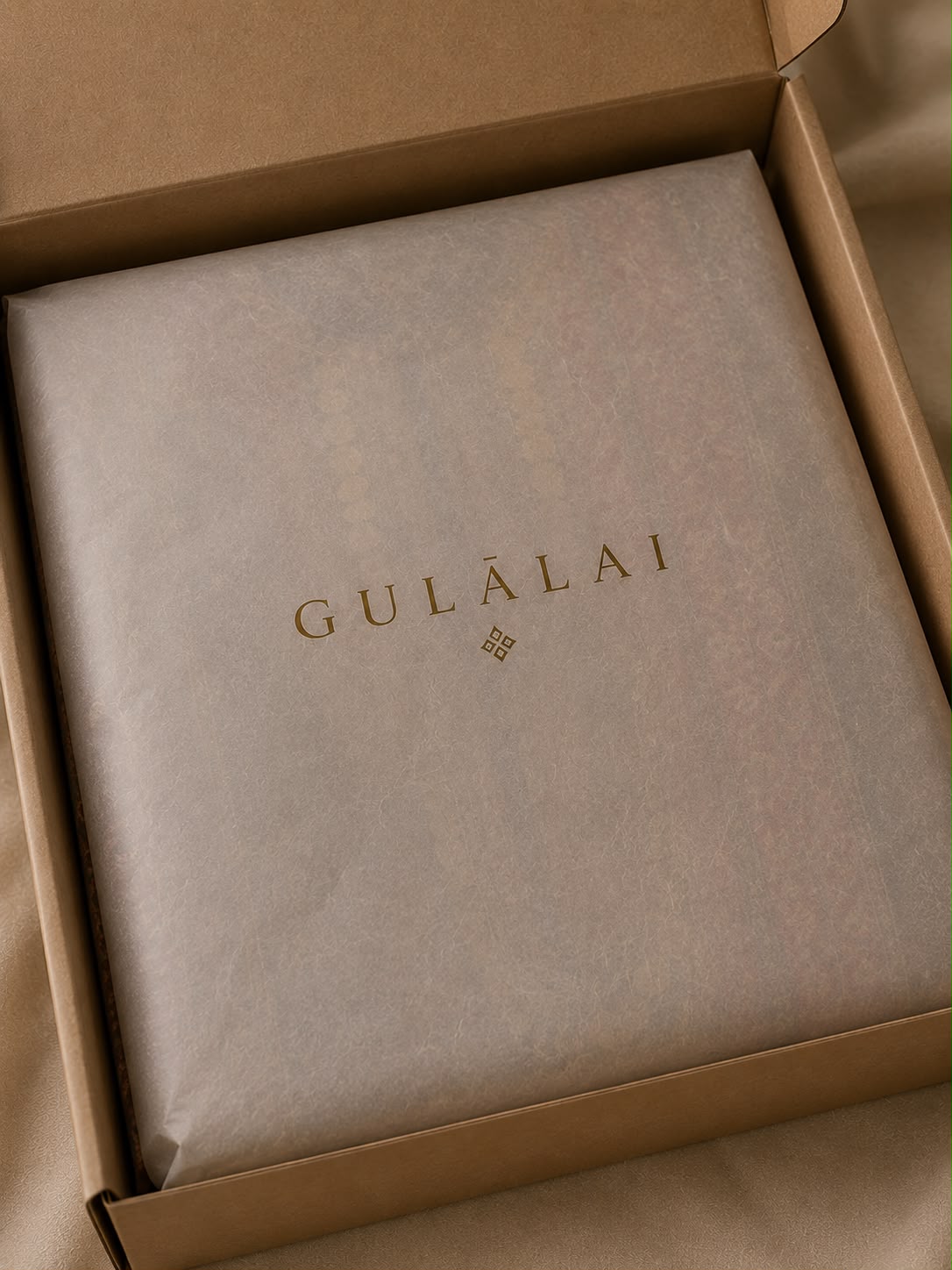
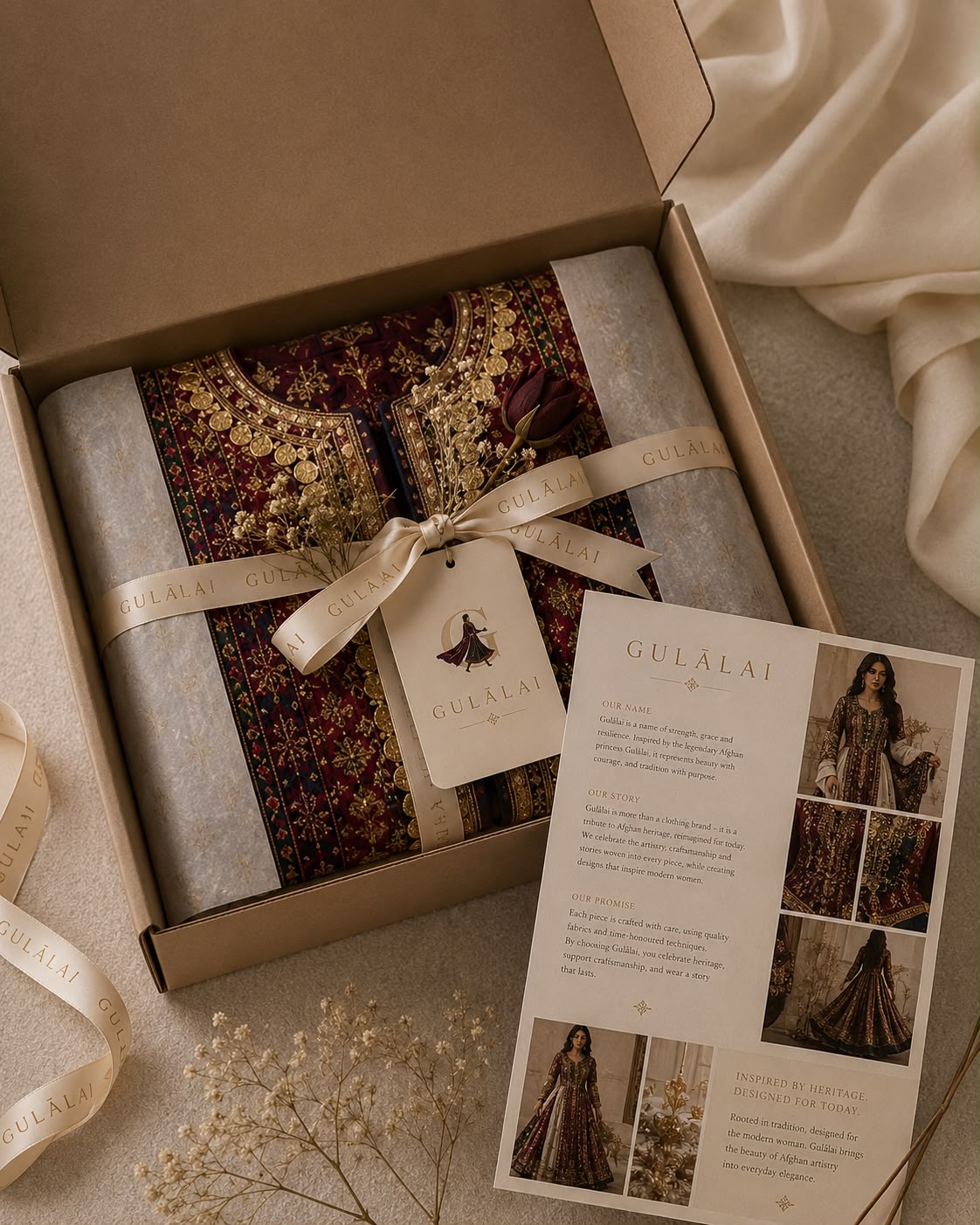
Every commission leaves London by hand — folded in tissue, sealed with wax, laid into a box the piece was made for. Alongside it, a story card names the dress, the city it comes from, and the women whose hands finished it.
- Signature tissue, wax-sealed
- A hand-lettered story card for every piece
- Fully lined, hand-finished, one size in the old way
- Shipped worldwide from London
گلالۍ
A Pashto name for a wildflower of the eastern mountains, and for the girl in the old poem who would not turn back from the field.
The house takes her name and, with it, the older idea it belongs to: beauty with courage. Tradition with purpose. A dress made once, properly, and kept.